A game-changing approach to autism support that aims to have all autistic kids in Western Australia able to communicate effectively by school entry has received more than $11 million in funding.
- About two in three autistic children experience major communication challenges.
- CliniKids researchers are developing a new approach called COMPASS, which aims to have all autistic kids in WA able to communicate effectively by school entry.
- A clinical trial will test whether COMPASS is more effective in promoting better communication outcomes compared to current practice.
With about two in three autistic children experiencing major communication challenges, researchers at CliniKids at The Kids Research Institute Australia are undertaking a five-year research program to develop a world-first personalised approach to promote better communication outcomes.
The Stan Perron Charitable Foundation has committed significant funding to COMPASS over five years, with additional support provided by the Channel 7 Telethon Trust for the first two years.
Program co-lead Professor David Trembath, Senior Principal Research Fellow at CliniKids, said this bold program was the first step towards transformational change, using science to develop and validate a new approach that would improve the effectiveness of supports provided to children and families.
"COMPASS will provide a more accessible, efficient, and personalised assessment approach, reducing time spent on waitlists and appointment costs for families,"
Professor Trembath said.
COMPASS — short for COMmunication through Personalised ASsessment and Support — will use a new computerised adaptive assessment tool (CAT), which is the world’s first adaptive testing protocol for characterising child-onset neurodevelopmental and neuropsychiatric conditions, including autism.
Health and allied health professionals will send the CAT assessment to the family, who complete a comprehensive set of questions at home in 45-60 minutes. The system will automatically score the assessment, giving the clinician a unique, detailed clinical profile for each child. This will include information relevant to evidence-based diagnostic decision-making, allowing clinicians to begin treatment planning before the family's first appointment.
CAT is more affordable and faster than current assessment models, with the potential to reduce wait lists. It can also be administered remotely, making assessment accessible to families who may otherwise struggle to reach services.
By comprehensively mapping each child’s unique profile of strengths and needs, CAT was specifically developed to capture and identify support needs of children irrespective of their diagnostic label; making it well aligned with the Thriving Kids initiative. 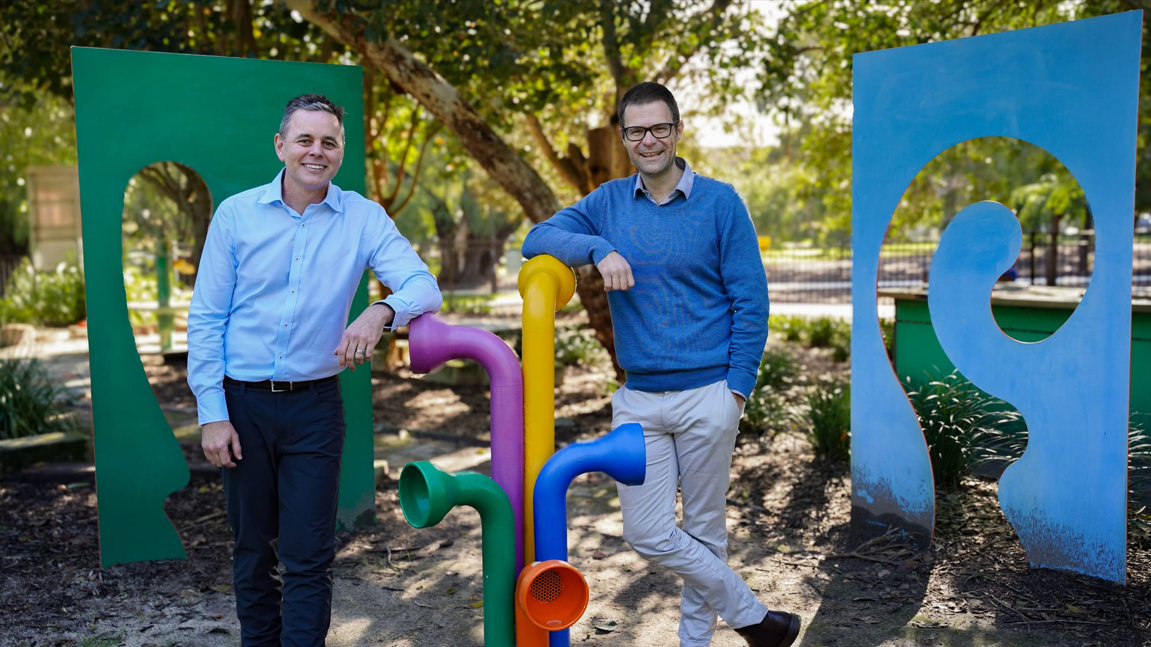
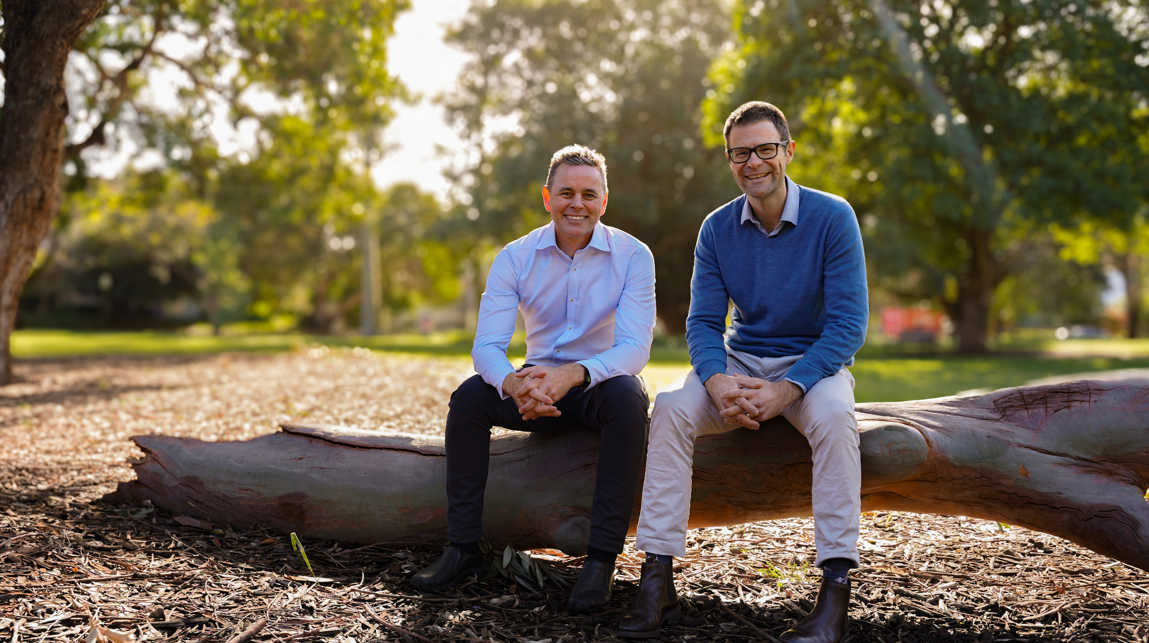
L-R David Trembath & Andrew Whitehouse
Professor Andrew Whitehouse, The Kids' Deputy Director Research, Angela Wright Bennett Professor of Autism Research, and Director of CliniKids, said the program would deliver a new, evidence-based way to promote better communication outcomes to help autistic children start school able to communicate and participate.
"In WA alone, approximately three in five autistic children reach school age unable to communicate easily, severely impacting their education and posing challenges for teachers needing to meet the needs of all students.
“Unfortunately, there is no single approach that is effective in supporting the communication development of all autistic children, and there is currently little understanding about how to ensure each autistic child receives the most effective support for their specific needs,” Professor Whitehouse said.
“Without an evidence-based method for matching children with effective clinical supports, families are left to undergo a costly process of trial and error, further entrenching the child’s communication disability.
“COMPASS will address this urgent issue by, first, using new computerised adaptive testing to understand each child’s strengths and supports needs, and second, acquiring knowledge about which clinical and community-based supports are most effective in promoting better communication outcomes for different children.
“When we help kids communicate, every aspect of their life becomes easier," Professor Whitehouse said.
"COMPASS focuses on communication, but it is the whole of the child and family we will be supporting.”
Globally, the prevalence of autism and other neurodevelopmental conditions has risen sharply over the past two decades. This shift reflects a combination of greater awareness, broader diagnostic criteria, and improved detection, but its effect on services has seen unprecedented demand for assessment and supports.
CliniKids client Tracey Jewel Constable is mum to Frankie, 5, who was diagnosed with autism level 2/3 at 3 years old. Frankie has selective mutism and is semi verbal.
“One of the biggest challenges we have experienced is that autism is often treated as though there is a standard pathway or set of supports that will work for every child. However, Frankie has vastly different strengths and challenges to other kids," said Ms Constable.
"We are blessed that he can communicate and talk to us when regulated, but he is quite speech-delayed and people who don’t know Frankie have trouble understanding him, which leads to him having meltdowns. When Frankie is upset, he prefers to communicate by pointing to his visual charts or physically signing.
“A program like COMPASS could help children like Frankie arrive at school understood, which would reduce a lot of stress on parents and also anxieties in kids like Frankie.”
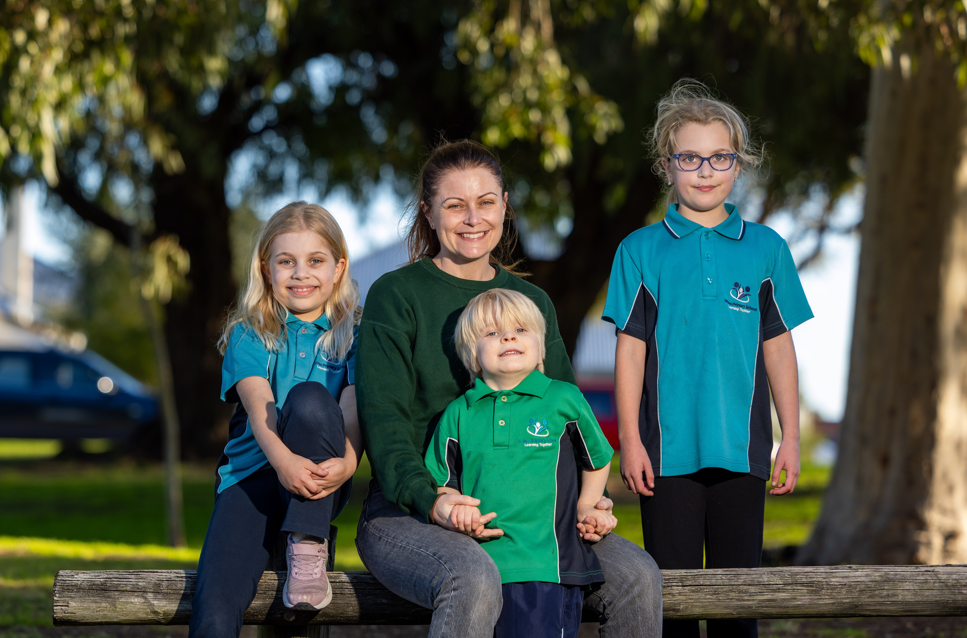
Stephens Family L-R Alice, Vicky, Charles, Helena
CliniKids client Vicky Stephens is a teacher and mum of three - Helena, 10, Alice, 7, and Charles, 4. Helena and Charles are autistic and have communication differences that impact the family’s daily lives.
“It can be frustrating as a parent - and more so as an autistic kid I’m sure - to see supports offered that are just cookie cutter autism supports. This ends up wasting everyone’s time and money,” Ms Stephens said.
She believed that the individualised assessments and tailored communication supports being developed through COMPASS would benefit families like hers and the wider community.
“This would mean my kids don’t start school on the back foot. The support this would provide to the child and family would be huge. If this information could be shared with teachers and other therapists, that would be incredibly helpful - I’m a teacher and would love to have this information about students who may be at risk."
It is expected that CAT will be available for use in clinics across WA by early 2030. Professor Trembath said the long-term vision was for COMPASS to be available not only to autistic kids, but to all children with communication challenges.
First published Tuesday 25 August 2026.
View all news articles