
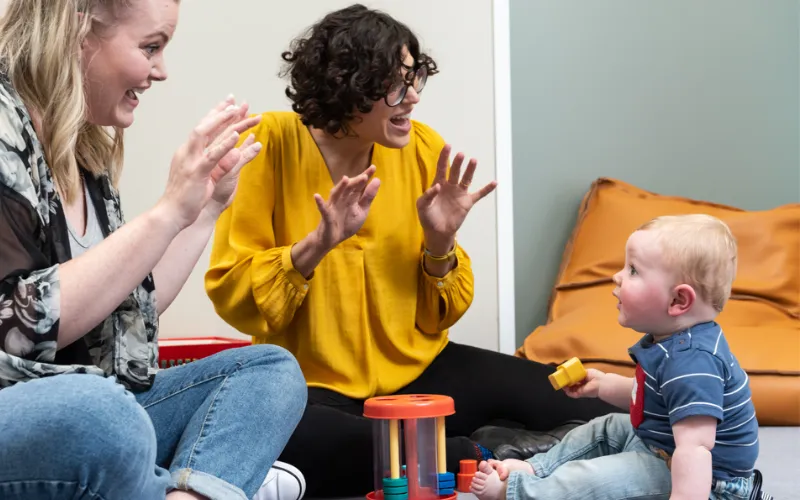
At CliniKids, we offer evidence-based paediatric Speech Therapy to support children’s speech, language and communication.
We help kids to develop and use communication in ways that are meaningful to them. This may include understanding what other people say, expressing thoughts and ideas, sharing interests, making choices, or communicating wants and needs.
Our Speech Pathologists work collaboratively with children and their families to identify meaningful goals, and develop strategies that can be incorporated into everyday routines at home, childcare or school.
Our Speech Pathologists provide evidence-based, neuro-affirming and family-centred support tailored to each child's individual strengths, interests and needs.
Many of the children we work with have an autism diagnosis or developmental differences, however no diagnosis is required to attend CliniKids.
Our Speech Pathology team can support your child in the following areas:
Social communication and play
Our Paediatric Speech Therapy team support children to learn skills to build strong relationships with important people in their life. We also support families to understand their child’s communication preferences, style and needs.
Working on social communication may include support with sharing attention, sharing interests, starting or joining interactions, conversation, communicating with familiar and unfamiliar people and other friendship skills.
We can also work with your child to develop their ability to communicate and connect with others through play and shared activities.
Language skills
We support children in understanding, acquiring, and using language, helping them make sense of the world around them and clearly express their thoughts and ideas.
This may include learning new words, understanding questions, following conversations or putting ideas into sentences.
Speech sound skills
A child’s speech sound skills affect how they connect with others. Some children, including those with autism or developmental differences, experience challenges with speech. This can include sound development, pronunciation, sound patterns (phonology), and sequencing sounds and syllables.
Our Speech Pathologists can work directly with your child to improve their ability to produce and combine speech sounds, so they can clearly communicate and be understood by with others including family members, other children and teachers.
A CliniKids Speech Pathologist can assess your child's speech and work with your family to determine whether targeted support may be appropriate.
Note: To achieve the best outcomes, a child generally needs to be motivated to work on this type of goal. It may be appropriate to support foundation communication skills before moving on to work on specific sounds.
Total Communication Approach
Some children prefer using a total communication approach. This is a flexible method that explores all available methods a child may use to communicate, in addition to using words alone.
As well as supporting verbal communication, our Paediatric Speech Therapists encourage the use of multi modal strategies including pictures, gestures, and body language.
We also support kids in the use of Augmentative and Alternative Communication (AAC). Our clinicians use specialist knowledge to assess, prescribe and support children to use aided (e.g. speech generating devices or picture systems) and unaided (e.g. signing) forms of AAC.
Self-Advocacy
Our clinicians can support your child to communicate their preferences, boundaries, needs and ideas, including saying ‘no’, asking for a break, or letting others know what helps them.
Mealtimes
Eating, drinking and mealtimes are an important part of your child’s daily routine and can influenced by many factors. Our approach involves working in a family-centred way to support your child to have more enjoyable, independent, and safe mealtime routines. Where appropriate, we may work as part of a multidisciplinary team in this area, alongside our Occupational Therapy and Psychology teams.
Request a Speech appointment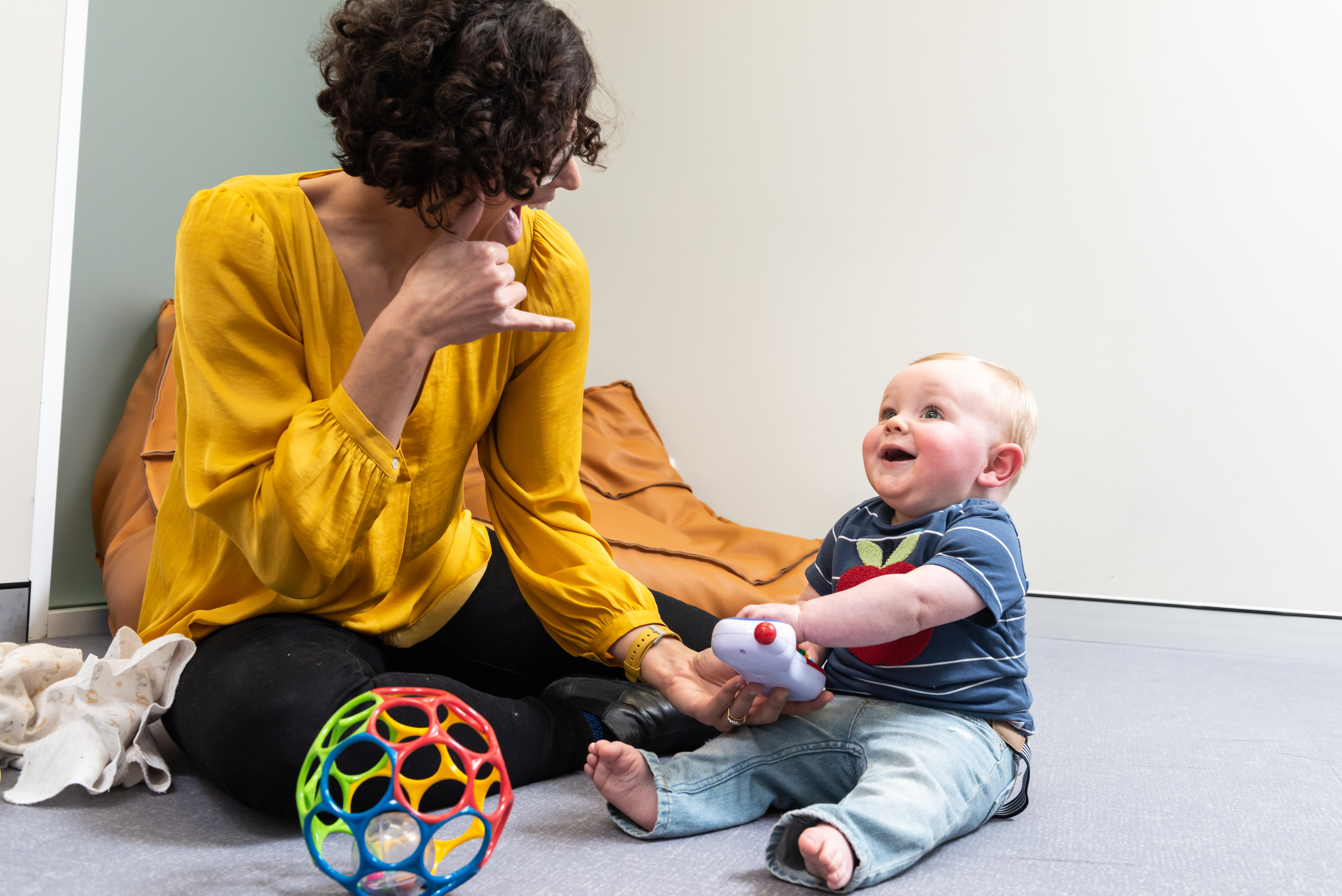
Understanding an autism diagnosis
This is a key element of our speech pathology offering. Support to understand their autism diagnosis is very helpful for many children and is shown to have positive benefits for wellbeing. Our Speech Pathologists can support you and your child to
- Understand their autism diagnosis
- Explore their autistic identity
- Understand neurodiversity
- Learn how to advocate for their communication preferences
What to expect in a speech therapy appointment
Your child’s Speech Pathology sessions may involve:
- Play-based activities
- Engaging in everyday interactions
- Developing practical strategies to support communication and participation
Our Speech Pathologists work collaboratively with children and families to identify meaningful goals and share strategies that can be incorporated into everyday routines at home, childcare or school.
The approach will depend on your child's individual needs and goals, with support designed to build on their existing strengths and preferred ways of communicating.
I've got questions
Check out the answers to our Frequently Asked Questions below. Want to ask something else? Contact us on 08 6319 1133 or at clinikids.reception@thekids.org.au and one of our friendly Client Support Officers will be able to assist you.
What can a CliniKids Speech Pathologist help with?
Our Speech Pathologists for kids, including those with autism and developmental differences, can support children with a range of speech, language and communication needs.
This may include support with understanding and using language, speech sounds, social communication, friendships, self-advocacy and play. Our Speech Pathologists can also support children who use Augmentative and Alternative Communication (AAC), as well as supporting some eating and mealtime needs.
Our Speech Pathologists work collaboratively with children and families to understand each child’s individual strengths, communication preferences and support needs.
What is paediatric speech therapy?
Paediatric speech therapy supports children to develop and use their speech, language and communication skills in ways that are meaningful to them.
Speech Pathology sessions may involve play-based activities, everyday interactions and practical strategies to support communication and participation. The approach will depend on your child's individual needs and goals, with support designed to build on their existing strengths and preferred ways of communicating.
How do I know if my child may benefit from seeing a Speech Pathologist?
Children develop speech, language and communication skills in different ways. You may consider speaking with a Speech Pathologist if you have questions about how your child communicates, understands or uses language, produces speech sounds, interacts and plays with others.
CliniKids Speech Pathologists can also support some children with eating, drinking and mealtimes. However, CliniKids does not provide assessment or ongoing support for complex dysphagia or complex swallowing needs. If your child has complex swallowing difficulties, please contact your doctor for an appropriate referral.
Can a CliniKids Speech Pathologist support my autistic child?
Yes. CliniKids Speech Pathologists support autistic children and their families across a range of speech, language and communication needs.
Support may include understanding and using language, speech clarity, social communication, play and self-advocacy. We recognise and value all forms of communication, including Augmentative and Alternative Communication (AAC).
Our Speech Pathologists take a neuro-affirming approach that respects each child's individual strengths, communication preferences and support needs. This includes working with families and others in the child's life to support meaningful communication, connection and participation in everyday activities.
Can Speech Pathology help with language and communication?
Yes.
Speech Pathology support is individualised and builds on each child’s strengths, interests and existing ways of communicating.
Depending on what is important to the child and family, support may focus on:
- Understanding and using language – such as following conversations, understanding questions, learning new words, or putting ideas into sentences.
- Social communication – such as sharing interests, starting or joining interactions, or communicating with familiar and unfamiliar people.
- Play and interaction – supporting children to communicate and connect with others through play and shared activities.
- Conversation and relationships – developing ways to share ideas, listen, respond, connect and participate in conversations in ways that honour their communication preferences.
- Self-advocacy – supporting children to communicate their preferences, boundaries, needs and ideas, including saying “no”, asking for a break, or letting others know what helps them.
- Communication confidence and participation – helping children communicate in everyday settings such as home, school, childcare and the community.
The goal is not to make every child communicate in the same way. Instead, Speech Pathologists work with children and their families to support meaningful communication, connection, participation and self-advocacy, in ways that respect each child’s individual communication style.
What is Augmentative and Alternative Communication (AAC)?
Augmentative and Alternative Communication (AAC) includes different ways of communicating in addition to, or instead of, spoken communication.
CliniKids Speech Pathologists can assess and support children who may benefit from AAC. This can include aided communication, such as speech-generating devices and picture systems, as well as unaided communication such as signing.
Our Speech Pathologists use a total communication approach that recognises, respects and supports different ways of communicating, including speech, pictures, gestures and body language.
Can a Speech Pathologist help with eating and mealtimes?
Yes. Eating, drinking and mealtimes can be influenced by many different factors. CliniKids works with children and families in a multidisciplinary, family-centred way to support more enjoyable, independent and safe mealtime routines.
The support recommended will depend on your child's individual needs and circumstances. CliniKids Speech Pathologists do not support complex swallowing difficulties.
Does my child need an autism diagnosis to see a CliniKids Speech Pathologist?
No. Your child does not need an autism diagnosis to access Speech Pathology services at CliniKids. Our Speech Pathologists support children with a range of speech, language, communication and developmental needs, with training and experience in supporting autistic children and children experiencing developmental delays.
If you're unsure whether Speech Pathology is suitable for your child, our Client Support team can discuss your child's needs and help you understand which CliniKids services may be appropriate.
Do parents and caregivers take part in Speech Pathology sessions?
Yes. Parents and caregivers play an important role in their child's Speech Pathology support. The way you are involved will depend on your child, your family, and what you would like support with. Your Speech Pathologist may work directly with your child, with you as their parent or caregiver, or with you together.
Working collaboratively with families helps ensure that Speech Pathology support is meaningful and relevant to everyday life.
Your Speech Pathologist may share practical ideas, resources and strategies that can be naturally incorporated into everyday activities and interactions. By working together to understand what is important to your child and family, we can identify meaningful ways to support your child's communication, connection and participation in everyday life.
Do CliniKids Speech Pathologists work with other allied health professionals?
Yes. CliniKids Speech Pathologists can work collaboratively with our Occupational Therapists and Psychologists to provide multidisciplinary support where appropriate.
We also recognise the importance of working with the broader team around your child, which may include other health professionals, external services, educators, school staff and other important people in your child’s life.
With your consent, our clinicians can share information, exchange ideas and work together to support your child’s individual needs and family priorities.
This collaborative approach helps us consider different aspects of a child's communication, development, participation and wellbeing, with the aim of providing support that is coordinated, meaningful and relevant to everyday life.
Where can I find Speech Pathology near me?
If you're looking for Speech Pathology in Perth, CliniKids provides paediatric Speech Pathology services from our clinics in Subiaco and Joondalup. Services are primarily delivered in person, with telehealth available for selected supports involving children, parents or caregivers, where appropriate.
Our Speech Pathologists provide evidence-based, neuro-affirming support for children and families across a range of speech, language, communication and mealtime needs.
The support recommended will depend on your child's individual needs and circumstances. Please note that CliniKids Speech Pathologists do not provide support for complex swallowing difficulties.
Are Speech Pathology sessions available in person or online at CliniKids?
CliniKids services are available in person at our Subiaco and Joondalup clinics, with telehealth available for selected services.
The options available will depend on the type of therapy and your child's individual needs. Our Client Support team can provide more information.
How many Speech Pathology sessions will my child need?
The amount and frequency of Speech Pathology support will vary depending on your child's individual needs, goals, circumstances and what works for your family. There is no set number of sessions that every child needs.
Your CliniKids Speech Pathologist will work with you to identify meaningful goals and regularly review your child's progress and support needs. As your child’s needs and goals change, the type or frequency of support may change too.
Our aim is to support children and families to work towards the goals that are important to them, build confidence and skills that can be used in everyday life, and feel supported to move forward when the time is right. For some families, this may mean regular sessions for a specific period. For others, it may mean having a break from therapy, returning for a review, or finishing Speech Pathology support when their goals have been met.
Taking a break or finishing therapy does not mean support can never be revisited. Families can reconnect with Speech Pathology if their child’s needs or priorities change in the future.
What funding options does CliniKids accept for Speech Pathology services?
CliniKids accepts funding options including NDIS and private funding. Some CliniKids services may be eligible for a Medicare rebate with a valid referral or Medicare-funded care plan. Families may also be able to claim through their private health insurance, depending on their level of cover.
Our Client Support team can provide more information about funding and payment options when you enquire about Speech Pathology services.
How do I book an appointment with a CliniKids Speech Pathologist?
To enquire about seeing a CliniKids Speech Pathologist for your child, request an appointment here.
Got questions? Our Client Support team can discuss your child's needs, provide information about available Speech Pathology services and help you understand the next steps.
What is CliniKids?
CliniKids is The Kids Research Institute Australia’s first clinical service, providing therapies and supports for young children, including autistic children. The Kids Research Institute Australia is one of Australia’s largest paediatric medical research institutes. At CliniKids, our team of world-class researchers and experienced clinicians work in collaboration to provide children with the very best evidence-based therapies and programs.
Our clinical team provides services to both private and NDIS-funded families across paediatric Speech Pathology, occupational therapy and psychology in Perth. We support children aged 3–8 years, including autistic children.
We offer Psychology, Occupational Therapy and Speech Pathology services at our two Perth clinics in Subiaco and Joondalup. CliniKids is a registered NDIS provider. In addition, we offer webinars, free online parent information sessions, our popular 60 Second Science video series and other autism resources through our Information Hub. You can find more autism resources here.